



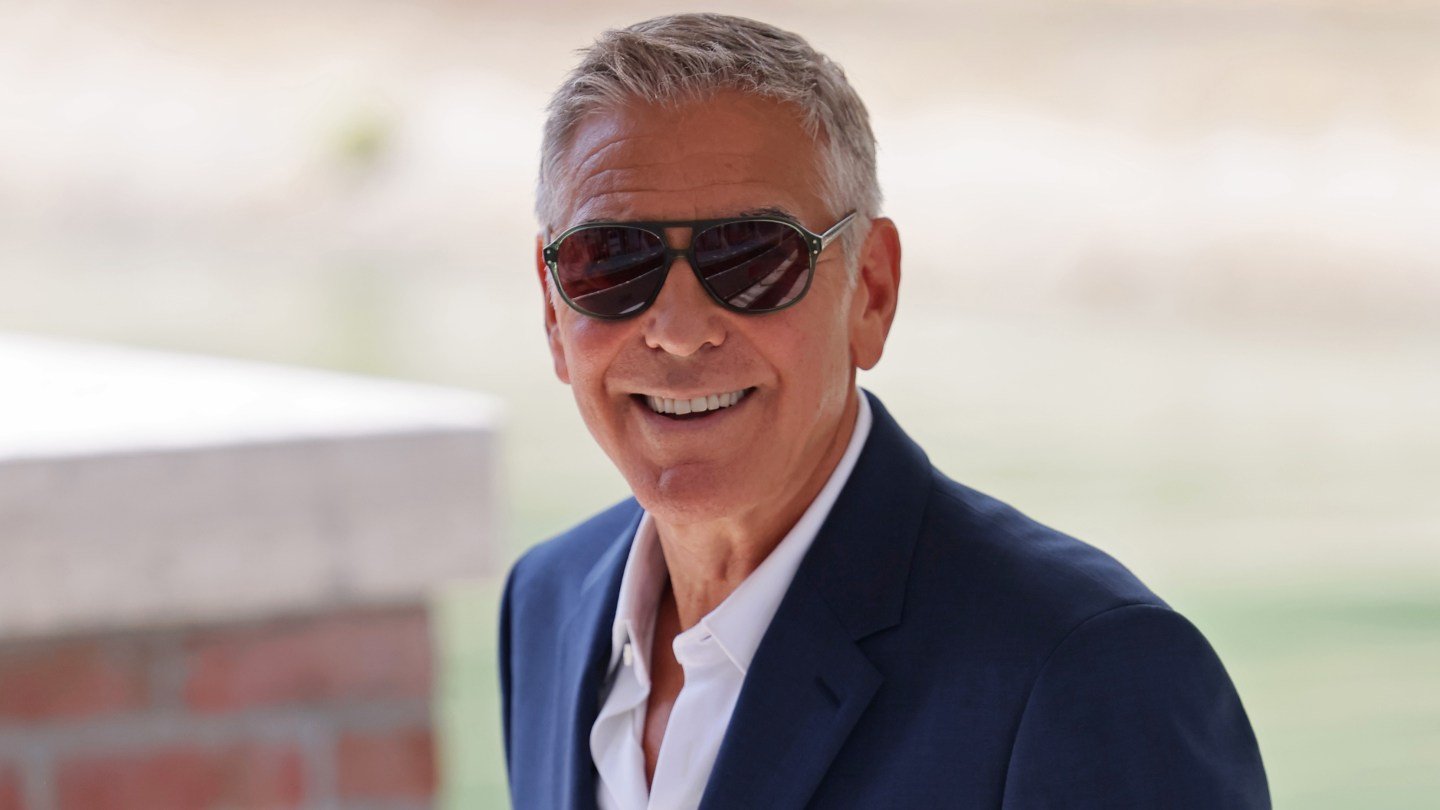
George Clooney arrived at the Venice Film Festival 2026 with more than a celebrated career behind him. Ahead of receiving the festival’s Golden Lion for Lifetime Achievement, the Oscar-winning actor and filmmaker addressed some of the biggest issues facing Hollywood and society, including artificial intelligence, journalism, free speech, politics and the changing film business.
At 65, Clooney remains one of Hollywood’s most recognizable figures, but his comments in Venice showed a filmmaker increasingly concerned about how technology and concentrated media power could reshape the industry.
George Clooney Receives Venice’s Golden Lion
Clooney is being honored with the Golden Lion for Lifetime Achievement at the 83rd Venice International Film Festival. The award recognizes his work as an actor, director and producer across a career spanning more than four decades.
The official Venice festival described the honor as a recognition of his multifaceted contribution to cinema. Clooney has also maintained a long relationship with Venice, having brought several of his projects to the festival over the years.
Clooney Raises Concerns About Artificial Intelligence
One of the major themes of Clooney’s Venice press conference was artificial intelligence.
The actor acknowledged that AI will become an increasingly important part of the entertainment industry but warned that its growth could have serious consequences for workers. He pointed specifically to visual-effects professionals and other creative roles that could be affected as AI tools become more capable.
Clooney also expressed concern about deepfakes and the broader impact of AI-generated content. As synthetic images and videos become harder to distinguish from reality, he argued that society could face a growing problem with trust and authentic information.
A Warning About Journalism and Media Ownership
Clooney’s concerns extended beyond Hollywood.
The filmmaker, whose father was a journalist, spoke about the increasing concentration of media ownership among some of the world’s wealthiest individuals. He argued that having major sources of public information controlled by a small number of powerful people creates risks for journalism and democracy.
His connection to journalism is also reflected in his work. His 2005 film Good Night, and Good Luck. explored journalist Edward R. Murrow’s confrontation with political pressure during the McCarthy era. Clooney pointed to that experience as an example of why independent journalism remains important.
Clooney Defends Mark Ruffalo and Free Speech
The Hollywood star was also asked about actor Mark Ruffalo and his criticism of the proposed Paramount-Warner Bros. Discovery merger.
Clooney defended Ruffalo’s right to express his views, emphasizing the importance of free speech even when people strongly disagree with one another. He argued that allowing different opinions is fundamental to a functioning democracy.
The comments come at a moment when Hollywood is facing major questions about corporate consolidation, creative freedom and who controls the industry’s most powerful companies.
Clooney’s View of Hollywood’s Changing Film Industry
Clooney also discussed the changing relationship between major studios and film festivals.
He suggested that large studios increasingly produce franchise-driven and intellectual-property-focused movies that may not need festivals in the same way that more original films once did. As Hollywood becomes more dependent on established brands, independent and international cinema may have an increasingly important role at major festivals.