



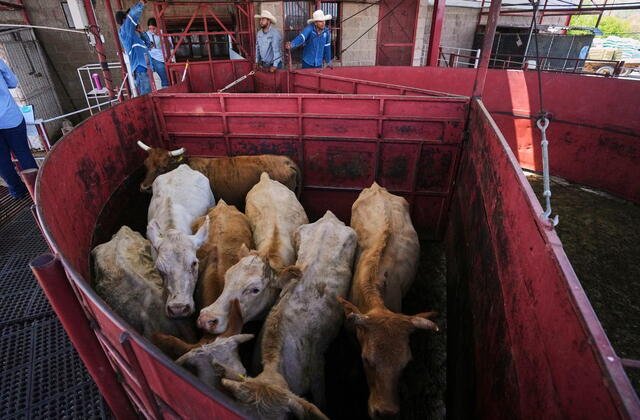
The United States has taken another step toward restoring cattle trade with Mexico, reopening the Douglas, Arizona, border crossing for livestock imports after a lengthy suspension linked to the spread of New World screwworm.
The move comes as American consumers continue to face unusually high beef prices. However, economists and industry analysts caution that the limited reopening is unlikely to produce a major or immediate decline in grocery-store beef prices.
Arizona Border Port Reopens
The U.S. Department of Agriculture began a phased reopening of selected southern border ports for Mexican cattle on August 24.
Douglas, Arizona, which borders Mexico’s Sonora state, is the first location included in the latest reopening plan. USDA says every animal entering through the approved ports will undergo inspection designed to protect the U.S. livestock industry from New World screwworm.
Additional ports in New Mexico could reopen later, depending on disease-control progress and assessments by U.S. authorities.
Why Beef Prices Remain a Concern
The reopening comes at a difficult time for the U.S. cattle industry.
American cattle inventories remain historically low, limiting the amount of beef that can be produced domestically. USDA’s latest cattle outlook also points to tighter supplies of calves entering feedlots later in 2026 and into 2027.
That shortage has helped keep beef prices elevated even as policymakers look for ways to increase supply.
Industry economists say that increasing Mexican cattle imports could provide some additional supply, but Mexico traditionally represents only a relatively small portion of the overall U.S. cattle supply. As a result, the initial impact on consumer prices is expected to be limited.
Screwworm Remains a Major Concern
The original border restrictions were introduced because of the New World screwworm, a parasite capable of seriously harming livestock.
The USDA has been closely monitoring the situation and has developed additional inspection and certification requirements for Mexican cattle. Sonora and Chihuahua have been identified as lower-risk areas under the current approach, although authorities continue to monitor developments.
Mexico has also expanded measures designed to control the parasite, including the use of sterile flies to reduce reproduction.
Reopening Is Only Part of the Solution
Economists say the reopening of the cattle border should not be viewed as a quick fix for America’s beef-price problem.
The U.S. cattle herd has been reduced by years of difficult conditions, including drought and challenging economics for ranchers. Rebuilding the national herd takes time because producers need several years to expand breeding populations and increase the number of cattle available for market.
That means even a larger flow of cattle from Mexico would likely have only a gradual effect on the overall U.S. beef market.
What It Means for American Consumers
For shoppers, the most important question is whether beef prices at supermarkets and restaurants will fall.
The answer may not be immediate.
More imported cattle could improve supply and provide additional flexibility to meat processors, but the size of the reopening, disease-control requirements and historically tight U.S. cattle inventories all limit how quickly consumers might see an impact.
USDA’s current outlook continues to show tight cattle supplies and elevated price support into the coming years.
A Carefully Watched Reopening
The reopening of the Douglas port represents an important development in U.S.-Mexico agricultural trade, but authorities are approaching it cautiously.
Future decisions will depend heavily on disease-control efforts and the results of inspections at the border. USDA has indicated that additional ports could be considered after evaluating the initial reopening.
For now, the policy offers the U.S. cattle market another source of supply, but consumers should not expect Mexican imports alone to bring down beef prices quickly.