




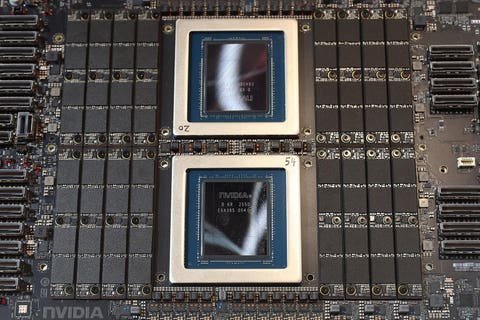
For years, the global AI race has largely been viewed as a battle over advanced semiconductors. The United States has used export controls to restrict China’s access to the most powerful AI chips, with the broader goal of slowing the country’s ability to develop advanced artificial intelligence.
But that strategy is facing a new challenge: AI chips can be accessed remotely through cloud infrastructure.
A Forbes analysis by Vivian Toh argues that Washington’s effort to control the physical movement of advanced chips has exposed a major loophole. Restricting where chips can be shipped does not necessarily determine who can ultimately use their computing power.
The Original Strategy: Control the Chips
The logic behind U.S. semiconductor restrictions was relatively straightforward.
If China could be prevented from obtaining the world’s most advanced AI accelerators, Chinese companies and researchers would have less computing power available to train increasingly sophisticated AI models.
That approach placed enormous importance on controlling the physical supply chain.
Advanced GPUs are manufactured in a limited number of locations, require sophisticated semiconductor production and depend on complicated global supply networks. Export restrictions therefore became one of Washington’s most important tools in the technology competition with Beijing.
But cloud computing has changed the equation.
The Cloud Creates a New Path to AI Computing
A company doesn’t necessarily need to physically own an advanced AI chip to use it.
Cloud providers can install powerful GPUs in data centers and rent access to the computing capacity remotely. A customer located thousands of miles away can potentially use those machines through an internet connection.
That creates a significant distinction between controlling the hardware and controlling access to the hardware.
According to the Forbes report, Chinese hyperscalers including ByteDance, Alibaba and Tencent have reportedly accessed Nvidia computing resources through data centers in countries such as Thailand, Malaysia and Japan.
Geography Is Becoming Less Important
The development creates a difficult problem for policymakers.
Traditional export controls are built around physical movement. Regulators can restrict where a semiconductor can be shipped, who can purchase it and which companies can manufacture or distribute it.
Cloud computing introduces another layer.
The chip may remain physically located in a permitted country while its computing power is accessed remotely by users elsewhere.
That means future technology controls may increasingly need to address remote access to computing resources, rather than focusing exclusively on physical semiconductor shipments.
The Battle Could Shift From Silicon to Infrastructure
The emerging AI competition is therefore becoming a broader infrastructure battle.